Introduction
When people think of horned dinosaurs, images of the mighty Triceratops often come to mind. But the ceratopsian family is vast and full of fascinating, lesser-known members—one of the most intriguing being Dykeceratops. Although not as widely recognized as its iconic relatives, Dykeceratops has compelled paleontologists to re-examine ceratopsian diversity, evolution, and classification. This dinosaur stands as a testament to how even fragmentary fossils can open doors to new scientific debates.
In this article, we will explore the origins, discovery, anatomy, ecological role, and ongoing controversies surrounding Dykeceratops, offering readers a comprehensive understanding of this mysterious prehistoric creature.
Discovery and Naming of Dykeceratops
Dykeceratops was named in the early 21st century based on fossil material discovered in the Upper Cretaceous deposits of Mongolia’s Gobi Desert—an area famous for yielding numerous ceratopsian dinosaurs. The genus name derives from a combination of terms that roughly translate to “Dýke’s horned face,” honoring contributions made by researchers involved in describing the specimen.
However, Dykeceratops has been at the center of significant taxonomic debate. Initially described as a distinct genus, some paleontologists later argued that the fossils were too fragmentary or belonged to previously known ceratopsians. Despite the controversy, the original description highlighted unique skeletal features that justified its classification as a new genus at the time.
Physical Characteristics: What Did Dykeceratops Look Like?
Although only partial remains of Dykeceratops have been recovered, paleontologists have inferred several anatomical features:
Horn Configuration
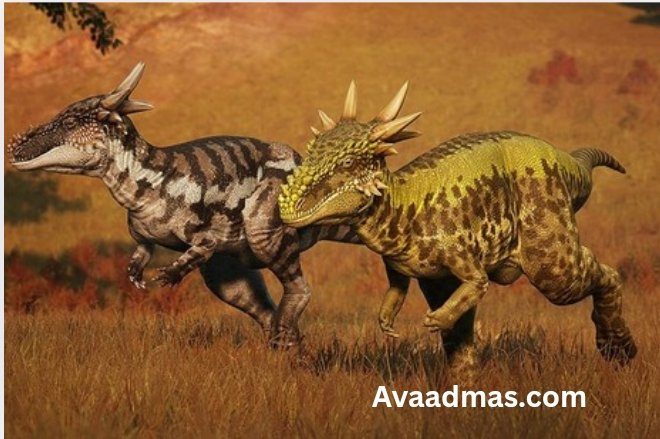
Ceratopsians are famous for their horns, and Dykeceratops was no exception. Fossil evidence points to a prominent nasal horn and two brow horns above the eyes, though the exact size and curvature remain subject to debate. Some reconstructions depict it with forward-curving brow horns similar to Einiosaurus, while others suggest straighter, more robust horns.
Frill Structure
The frill is one of the defining characteristics of horned dinosaurs. Based on available skull fragments, Dykeceratops likely had:
- A moderately sized frill
- Possible openings (fenestrae) within the frill for weight reduction
- Unique bone ornamentation that may have played a role in species recognition
Because the frill fragments are incomplete, paleontologists remain cautious when reconstructing its full shape.
Body Size and Build
Dykeceratops is estimated to have been a medium-sized ceratopsian. Like its relatives, it likely possessed:
- A stocky, quadrupedal stance
- A deep torso suited for digesting tough plant matter
- A short tail and powerful limbs
These features indicate that it was a capable forager and potentially a herd-dwelling herbivore.
Diet and Feeding Behavior
As an herbivore, Dykeceratops would have fed primarily on the rich vegetation of the Late Cretaceous period. Mongolia’s prehistoric landscape offered a range of food sources, including:
- Ferns
- Shrubs
- Cycads
- Early flowering plants
- Low-growing conifers
Its beak-like mouth was ideal for clipping vegetation, while its powerful jaw muscles and dental battery—a feature common in ceratopsians—allowed it to grind plant matter efficiently. This combination made Dykeceratops well adapted to extracting nutrients from fibrous plants.
Habitat and Environment of the Late Cretaceous
During the Late Cretaceous, the region that is now Mongolia was a semiarid environment with a mix of desert dunes, river channels, and seasonal floodplains. Despite the harsh climate, the area supported a diverse ecosystem filled with herbivores, predators, and small mammals.
Dykeceratops shared its habitat with:
- Small ceratopsians like Psittacosaurus
- Duck-billed hadrosaurs
- Tyrannosaur-like predators, such as Tarbosaurus
- Oviraptorids that roamed sandy dunes
- Early birds and small mammals
In such a dynamic ecosystem, Dykeceratops would have used its horns and frill not only for defense but also for social interactions within its species.
Possible Behavior and Social Structure
Ceratopsians are widely believed to have been social animals, often living in herds that provided protection from predators. Although there is limited evidence for Dykeceratops specifically, comparisons with related species suggest similar social tendencies.
Defensive Behavior
The horns and frill likely served multiple purposes:
- Defense against predators: A charging ceratopsian would have been formidable.
- Display during mating rituals: Brightly colored frills or horn displays may have attracted mates.
- Species recognition: Unique frill ornamentation could help identify members of the same group.
Herding
If Dykeceratops lived in herds, younger individuals would have been protected within the group. This communal behavior is believed to have been common among ceratopsians.
Scientific Debate Surrounding Dykeceratops
One of the most fascinating aspects of Dykeceratops is the debate surrounding its classification. After its initial description, several paleontologists questioned whether it truly represented a separate genus or whether the fossils belonged to another already known species.
Arguments for a Distinct Genus
Supporters of Dykeceratops as a unique genus highlight:
- Distinctive features in the skull fragments
- Variation in horn placement
- Differences in frill ornamentation
These characteristics, they argue, are significant enough to justify a separate classification.
Arguments Against
Critics believe:
- The fossil material is too limited
- Differences fall within the range of variation seen in related ceratopsians
- It may actually belong to Magnirostris or another similar species
This debate continues today, illustrating how paleontology evolves with every new discovery.
Importance of Dykeceratops in Paleontology
Even with limited fossil remains, Dykeceratops plays an important role in understanding ceratopsian evolution. Every new genus—confirmed or disputed—helps researchers refine the dinosaur family tree.
Why Dykeceratops Matters
- It provides insight into ceratopsian diversity in Asia
- It highlights evolutionary trends in horned dinosaurs
- It encourages re-examination of fossil collections for overlooked species
- It exemplifies the importance of detailed, careful classification
Whether or not future research confirms Dykeceratops as a distinct genus, its discovery has already enriched scientific understanding.
Future Research and Potential Discoveries
The Gobi Desert continues to produce remarkable fossils each year. Future expeditions may uncover more complete remains of Dykeceratops, helping clarify its appearance, behavior, and evolutionary relationship to other ceratopsians.
Potential future findings may include:
- A more complete skull
- Postcranial skeletons that reveal body structure
- Evidence of juvenile individuals
- Clues about social behavior, such as group fossil sites
Such discoveries could confirm Dykeceratops as a valid genus or reassign it within the ceratopsian family.
Conclusion
Dykeceratops may not yet be a household name, but its story reflects the dynamic and ever-changing world of paleontology. With limited fossils, contested classification, and ongoing debates, this enigmatic ceratopsian sparks scientific curiosity and encourages deeper exploration into dinosaur diversity.
Whether future evidence solidifies its place as a distinct genus or reshapes our understanding of ceratopsian evolution, Dykeceratops serves as a reminder that each fossil—no matter how incomplete—holds the potential to rewrite prehistoric history.