Introduction
Spheniscus mendiculus, commonly known as the Galápagos penguin, is one of the most fascinating and unusual penguin species on Earth. Unlike its cold-climate relatives, this penguin lives near the equator, making it the only penguin species found north of the equator in the wild. Endemic to the Galápagos Islands of Ecuador, Spheniscus mendiculus represents a unique example of evolution, adaptation, and survival in a challenging environment.
This species has captured the attention of scientists, wildlife enthusiasts, and conservationists due to its rare habitat, small population size, and vulnerability to environmental changes. Understanding Spheniscus mendiculus is not only about learning about a penguin—it is about understanding how life adapts to extremes and why protecting biodiversity matters.
Taxonomy and Scientific Classification
Spheniscus mendiculus belongs to the genus Spheniscus, which includes banded penguins such as the Humboldt, Magellanic, and African penguins. The genus name Spheniscus comes from the Greek word meaning “wedge-shaped,” referring to the penguins’ streamlined bodies.
The species name mendiculus means “little beggar” in Latin, possibly referencing its small size or distinctive posture. This penguin was scientifically described in the 19th century and has since been recognized as a distinct species due to its geographic isolation and unique adaptations.
Physical Characteristics and Appearance
Spheniscus mendiculus is the smallest penguin species in the genus Spheniscus. Adults typically measure around 48–50 centimeters in height and weigh between 2 and 2.5 kilograms. Its compact body helps regulate heat in a warm climate.
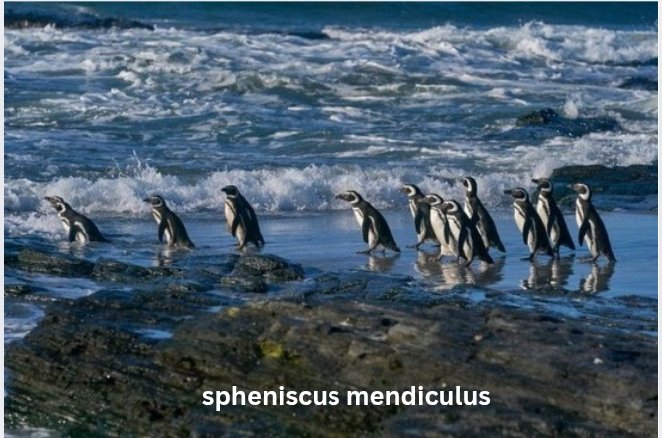
The penguin has the classic black-and-white coloration common to many penguin species. The back and head are black, while the belly is white with a thin black band across the chest. A white stripe runs from behind the eye down to the chin, giving it a sharp and expressive facial pattern.
Unlike Antarctic penguins, Spheniscus mendiculus has less dense feathering, which helps it release excess heat. It also uses behavioral adaptations such as panting and holding its flippers away from the body to cool down in high temperatures.
Unique Habitat and Geographic Range
The Galápagos penguin lives exclusively on the Galápagos Islands, primarily on Isabela Island and Fernandina Island. These islands are located along the equator, where temperatures are much warmer than typical penguin habitats.
The survival of Spheniscus mendiculus in this region is made possible by cold ocean currents, particularly the Humboldt Current and the Cromwell Current. These currents bring nutrient-rich, cold water to the surface, supporting abundant fish populations that the penguins rely on for food.
The penguins nest in rocky crevices, lava tubes, and shaded coastal areas to protect themselves from the intense equatorial sun and predators.
Diet and Feeding Behavior
Spheniscus mendiculus is a skilled marine hunter. Its diet mainly consists of small schooling fish, such as sardines, anchovies, and mullet. Occasionally, it may also consume crustaceans.
These penguins hunt close to shore and usually dive to depths of 10 to 30 meters. Their streamlined bodies and strong flippers allow them to swim quickly and maneuver efficiently underwater.
Feeding typically occurs during daylight hours. The availability of food is closely tied to ocean conditions, making the species highly dependent on stable marine ecosystems.
Behavior and Daily Life
Galápagos penguins are generally shy and quiet compared to some other penguin species. They are often seen alone or in small groups rather than large colonies.
They spend much of their time alternating between foraging at sea and resting on land. During hot periods, they remain in shaded areas to avoid overheating. Social interactions include vocalizations, body movements, and mutual preening.
Despite living in a warm climate, Spheniscus mendiculus still relies on water to regulate its body temperature. Swimming not only helps with hunting but also serves as a way to cool down.
Reproduction and Breeding Cycle
The breeding behavior of Spheniscus mendiculus is closely linked to food availability rather than fixed seasons. When ocean conditions are favorable and food is abundant, breeding may occur at almost any time of the year.
Penguins form monogamous pairs, often returning to the same partner each breeding cycle. Nests are built in shaded lava crevices or caves to protect eggs and chicks from heat and predators.
Typically, two eggs are laid, but often only one chick survives due to limited resources. Both parents share responsibilities, including incubation and feeding. Chicks fledge after about two months, depending on food supply.
Adaptations to a Warm Environment
What makes Spheniscus mendiculus truly extraordinary is its ability to survive in a tropical environment. Unlike penguins that rely on thick fat layers for warmth, this species has evolved to avoid overheating.
Key adaptations include:
- Reduced body fat
- Sparse feather coverage
- Panting behavior similar to dogs
- Extended flippers to release heat
- Nesting in shaded or underground locations
These adaptations highlight the flexibility of evolution and demonstrate how species can survive outside their expected ecological niches.
Role in the Ecosystem
Spheniscus mendiculus plays an important role in the Galápagos marine ecosystem. As a predator of small fish, it helps maintain balance within the food web.
It also serves as an indicator species, meaning changes in its population can signal broader environmental problems such as overfishing, climate change, or pollution.
Additionally, the presence of the Galápagos penguin contributes to ecotourism, which supports conservation efforts and local economies when managed responsibly.
Threats and Conservation Challenges
Spheniscus mendiculus is classified as Endangered, with an estimated population of fewer than 2,000 individuals. Several factors threaten its survival.
Climate phenomena like El Niño can dramatically reduce food availability by warming ocean waters and disrupting fish populations. During strong El Niño events, penguin populations have declined sharply.
Other threats include:
- Introduced predators such as cats and rats
- Oil spills and marine pollution
- Overfishing in surrounding waters
- Habitat disturbance due to human activity
Because the species has a very limited range, even small environmental changes can have serious consequences.
Conservation Efforts and Protection
The Galápagos Islands are a protected area, and Spheniscus mendiculus benefits from national and international conservation programs. The Galápagos National Park plays a key role in monitoring and protecting penguin habitats.
Conservation actions include:
- Predator control programs
- Nest protection and habitat restoration
- Population monitoring
- Regulation of fishing activities
- Public education and awareness campaigns
Scientists continue to study the species to better understand its needs and improve conservation strategies.
Scientific Importance of Spheniscus mendiculus
From a scientific perspective, Spheniscus mendiculus is extremely valuable. It offers insights into evolutionary biology, climate adaptation, and species resilience.
Studying this penguin helps researchers understand how animals respond to climate variability and what factors increase extinction risk. These lessons are crucial in a world facing rapid environmental change.
Cultural and Educational Significance
The Galápagos penguin is a symbol of the islands’ unique wildlife. It is often featured in educational materials, documentaries, and conservation campaigns.
For students and researchers, Spheniscus mendiculus serves as a powerful example of how geography and environment shape life on Earth. Its story encourages respect for nature and highlights the importance of protecting fragile ecosystems.
Future Outlook for the Galápagos Penguin
The future of Spheniscus mendiculus depends largely on global climate stability and continued conservation efforts. While the species faces serious challenges, dedicated protection and research offer hope.
Reducing human impact, supporting sustainable fishing, and addressing climate change are essential steps to ensure this penguin’s survival. With proper care and awareness, future generations may continue to witness this remarkable penguin thriving near the equator.
Conclusion
Spheniscus mendiculus is more than just a penguin—it is a symbol of adaptation, survival, and the delicate balance of nature. Living in a place where penguins seem out of place, it challenges our assumptions about wildlife and habitats.
By learning about the Galápagos penguin and supporting conservation efforts, we take an important step toward preserving one of the world’s most unique species. Protecting Spheniscus mendiculus means protecting the rich biodiversity of the Galápagos Islands and the natural wonders they represent.