Introduction
The snow leopard is one of the most mysterious and fascinating big cats on Earth. Often called the “Ghost of the Mountains,” this elusive animal lives in some of the harshest and highest regions of the world. With its smoky-gray fur, piercing eyes, and powerful body, the snow leopard is perfectly adapted to cold, rugged landscapes where few creatures can survive. Despite its strength and beauty, the snow leopard faces serious threats that put its future at risk.
This article provides a 100% unique and detailed exploration of the snow leopard, covering its habitat, physical features, behavior, diet, cultural importance, and conservation challenges. Each section is structured with clear H2 headings, and the title accurately reflects the topic, as requested.
Introduction to the Snow Leopard
The snow leopard (Panthera uncia) is a large wild cat native to the mountain ranges of Central and South Asia. Unlike other big cats such as lions or tigers, snow leopards prefer isolation and live at extremely high altitudes, often between 3,000 and 5,500 meters above sea level. Because of their secretive nature and remote habitat, they are rarely seen in the wild.
Snow leopards play a vital role in maintaining the balance of mountain ecosystems. As apex predators, they help control herbivore populations, which protects fragile alpine vegetation. However, human activities and climate change are rapidly shrinking their safe spaces.
Physical Characteristics of the Snow Leopard
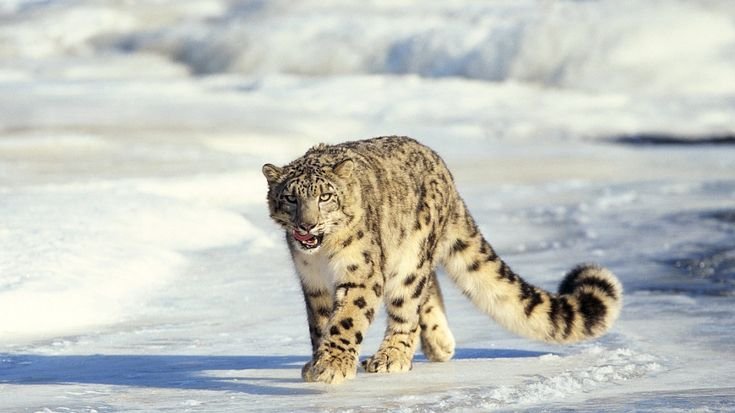
The snow leopard has a unique appearance that sets it apart from other big cats. Its thick, smoky-gray fur is patterned with black rosettes and spots, providing excellent camouflage against rocky, snowy terrain. This natural disguise allows it to stalk prey without being easily detected.
One of the most remarkable features of the snow leopard is its long, thick tail, which can be nearly as long as its body. The tail helps with balance when navigating steep cliffs and also serves as a warm wrap during cold weather. Its wide paws act like natural snowshoes, distributing weight evenly and preventing it from sinking into deep snow.
Snow leopards have powerful hind legs that allow them to leap up to 15 meters in a single bound. Their chest is broad, and their lungs are well-developed, helping them breathe efficiently in thin mountain air. All these features make the snow leopard a true master of high-altitude survival.
Habitat and Geographic Range
Snow leopards are found across 12 countries, including India, Nepal, China, Mongolia, Pakistan, Bhutan, and parts of Central Asia. They inhabit rugged mountain ranges such as the Himalayas, the Karakoram, and the Altai Mountains.
These cats prefer steep, rocky slopes, alpine meadows, and broken terrain where they can hide easily. Unlike many animals, snow leopards do not live in dense forests or open plains. Their habitat is cold, dry, and often covered in snow for much of the year.
Because their range spans international borders, protecting snow leopards requires cooperation between multiple countries. Political boundaries mean nothing to these animals, but conservation efforts must overcome legal and logistical challenges.
Diet and Hunting Behavior
The snow leopard is a carnivore and relies on a meat-based diet to survive. Its primary prey includes blue sheep (bharal), ibex, Himalayan tahr, marmots, and pikas. In some areas, snow leopards also hunt livestock such as goats and sheep, which can lead to conflict with local communities.
Snow leopards are solitary hunters and prefer to ambush their prey rather than chase it over long distances. Using the element of surprise, they stalk quietly before making a powerful leap to bring down their target. Their strong jaws and sharp teeth allow them to kill efficiently.
Unlike lions, snow leopards do not roar. Instead, they communicate through sounds such as hisses, growls, and a unique non-aggressive sound called a “chuff.” Their silent nature adds to their mysterious reputation.
Behavior and Lifestyle
Snow leopards are mostly solitary animals. Adult males and females come together only during the breeding season, which usually occurs between January and March. After a gestation period of about three months, the female gives birth to one to three cubs in a well-hidden den.
Cubs are born blind and helpless, relying entirely on their mother for warmth and food. As they grow, the mother teaches them essential survival skills, including hunting and navigating dangerous terrain. Young snow leopards usually stay with their mother for up to two years before becoming independent.
These cats are most active during dawn and dusk, a behavior known as crepuscular activity. This timing helps them avoid human contact and increases their hunting success.
Cultural and Symbolic Importance
In many mountain communities, the snow leopard holds deep cultural significance. It is often seen as a symbol of strength, mystery, and harmony with nature. In some regions, legends describe the snow leopard as a spiritual guardian of the mountains.
Countries like Nepal and Pakistan have embraced the snow leopard as a national conservation symbol. Festivals, artwork, and educational programs often feature the snow leopard to raise awareness about wildlife protection.
Despite its symbolic value, misunderstandings and fear sometimes lead to retaliation when snow leopards prey on livestock. Conservation programs now focus on education and community involvement to reduce such conflicts.
Threats Facing the Snow Leopard
The snow leopard is currently listed as Vulnerable on the IUCN Red List. Several major threats are responsible for its declining population.
Habitat Loss
Human expansion, mining, road construction, and infrastructure development are destroying and fragmenting snow leopard habitats. As their living space shrinks, it becomes harder for them to find food and mates.
Poaching and Illegal Trade
Snow leopards are illegally hunted for their fur, bones, and body parts, which are used in traditional medicine or sold on the black market. Even with strict laws, poaching remains a serious issue.
Human-Wildlife Conflict
When natural prey becomes scarce, snow leopards may attack livestock, leading to financial losses for herders. In retaliation, some snow leopards are killed.
Climate Change
Rising temperatures are pushing tree lines higher into mountain regions, reducing the open alpine zones that snow leopards depend on. Climate change also affects prey availability, further threatening their survival.
Snow Leopard Conservation Efforts
Conservation organizations, governments, and local communities are working together to protect the snow leopard. One of the most important global initiatives is the Global Snow Leopard and Ecosystem Protection Program (GSLEP), which aims to secure at least 20 healthy snow leopard landscapes across its range.
Community-based conservation programs play a crucial role. By offering livestock insurance, predator-proof corrals, and alternative income sources, these programs reduce conflict between humans and snow leopards.
Technology also supports conservation efforts. Camera traps, GPS collars, and satellite imagery help researchers track snow leopard populations and better understand their behavior. Education and awareness campaigns encourage people to value and protect this rare species.
Why the Snow Leopard Matters
The snow leopard is more than just a beautiful animal; it is a keystone species. Protecting snow leopards helps preserve entire mountain ecosystems, benefiting countless other plants and animals.
Healthy snow leopard populations indicate a healthy environment. When these predators thrive, it means prey species are balanced and ecosystems are functioning properly. Their protection also safeguards water sources that millions of people depend on downstream.
Saving the is not just about wildlife—it is about protecting nature, culture, and future generations.
Conclusion: Protecting the Ghost of the Mountains
remains one of the most elusive and awe-inspiring creatures on the planet. Perfectly adapted to life in extreme conditions, it symbolizes resilience, beauty, and balance in nature. Yet, despite its strength, the snow leopard cannot survive without human support.
Through responsible development, strong conservation policies, and community involvement, it is possible to secure a future for this magnificent cat. Protecting the snow leopard means protecting the mountains, ecosystems, and the delicate harmony of life itself.
The survival of the snow leopard is a shared responsibility—and a powerful reminder that even the most hidden creatures deserve a place in our world.